


- Plan backward from product readiness and realistic creator lead times.
- Separate confirmed commitments from hopeful launch coverage.
- Give every creator an owner, a next action, and a visible status.
How do you recruit creators for a product launch?
Start with a usable product brief, find creators who already demonstrate the relevant use case, confirm the offer, and track each partnership through delivery and content readiness. A list of interested creators is not a launch schedule. Your schedule needs confirmed availability, realistic shipping time, and room for the creator to try the product.
The planning sequence below is an example for an internal launch plan, not a TikTok deadline or a promise that creators can publish on your preferred date. Adapt it to product complexity, fulfillment, creator availability, and agreed deliverables.
Before recruitment: make the offer ready
Choose the product variant you can reliably supply. Prepare the product page, price, factual specifications, available inventory, shipping expectations, and a contact for questions. If the listing or fulfillment plan is still changing, tell creators what is provisional rather than presenting it as confirmed.
Write a one-page brief with the intended buyer, the problem the product solves, two or three demonstrable features, and what a viewer should understand after watching. Distinguish suggestions from required deliverables. A sample invitation by itself should not be recorded as an agreed publication commitment.
Build a shortlist around two or three use cases
For a compact travel organizer, use cases might include carry-on packing, gym-to-office routines, and keeping everyday accessories accessible. Search for creators who already show those activities. This gives you a reason for the product to appear in their content and a specific opening for your invitation.
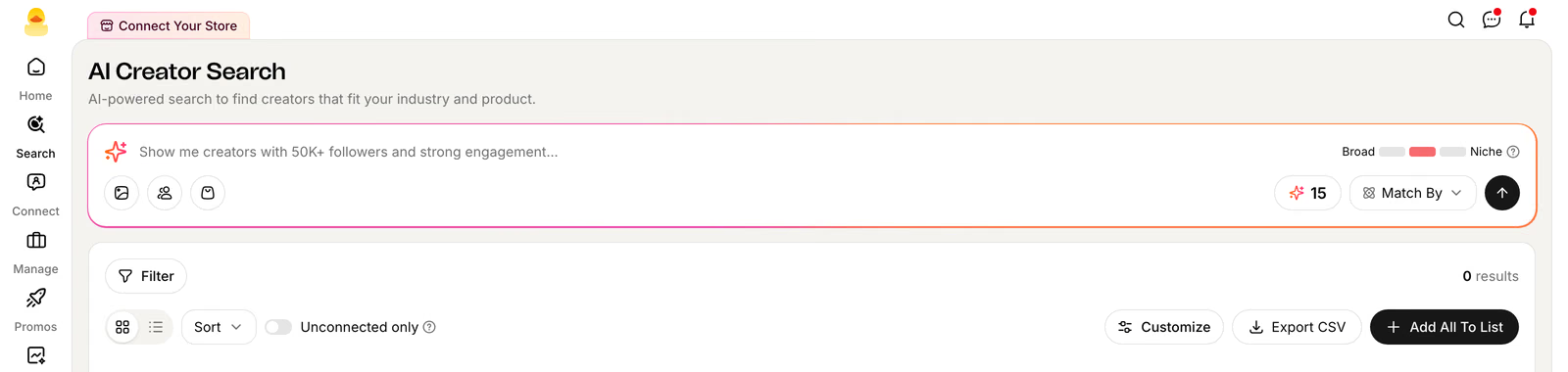
Use the AI search prompt templates to create separate lists by use case. Review recent content and record a relevant video for each candidate. Once you have strong references, use lookalike search to expand the pool. Do not interpret a large shortlist as confirmed coverage.
Work backward from your team’s capacity
Set a limit on how many conversations and shipments the team can support well. For example, a team able to manage twelve sample relationships at once should not approve thirty shipments without a plan for the additional work. This is a capacity example, not an industry benchmark.
If you have comparable historical data, use it for planning: expected published collaborations = qualified invitations × acceptance rate × publication rate among accepted collaborations. Keep the populations and observation windows consistent. For a new program without that history, use a small pilot to learn the rates instead of filling the spreadsheet with assumed certainty.
Send a specific invitation and confirm the details
An invitation should explain why you chose the creator, what the product is, what you are offering, and which details are open for discussion. Here is an illustrative first message:
Hi [name], your video showing [specific routine] is why I thought of you for [product]. We are preparing a launch around [use case] and would love to hear whether it fits your content. We can share [sample and proposed terms]. Are you open to reviewing the product details and discussing availability?
After interest, confirm the product variant, delivery details, proposed timing, and any agreed deliverables. Keep the conversation in one record. Use the outreach follow-up workflow when a reply is pending, with a clear reason for each follow-up.
Use a launch tracker that shows blockers
A simple tracker needs these fields:
- Creator and use-case group, with the evidence link.
- Owner, current status, and next action date.
- Offer confirmation and any agreed content timing.
- Sample approval, shipment, and delivery status.
- Product questions, blockers, and published content link.
- Actual results and the next partnership decision.
Keep “interested,” “terms confirmed,” “sample delivered,” and “content live” distinct. Before launch, review the blocked records: delayed shipments, unresolved questions, unavailable variants, and timing that has not been confirmed. Update the plan around those facts.
Review the launch without confusing stages
Compare content that has had a similar amount of time to reach viewers. Record which use cases generated useful demonstrations and which invitations produced positive replies. A creator waiting for delivery belongs in an operations review, not a content performance ranking.
Bring useful relationships into the next launch with a specific reason to collaborate again. Connect your tracker to the affiliate CRM workflow and use the AI Creator Search workflow to fill gaps in future shortlists.
Frequently asked questions
How early should recruitment start?
Work backward from actual fulfillment time, product trial time, and creator availability. There is no universal lead time that fits every product.
How many creators do I need for a launch?
Base the pilot on your support capacity and learning goals. Expand when you understand qualification, acceptance, and publication rates for your offer.